 Skip to content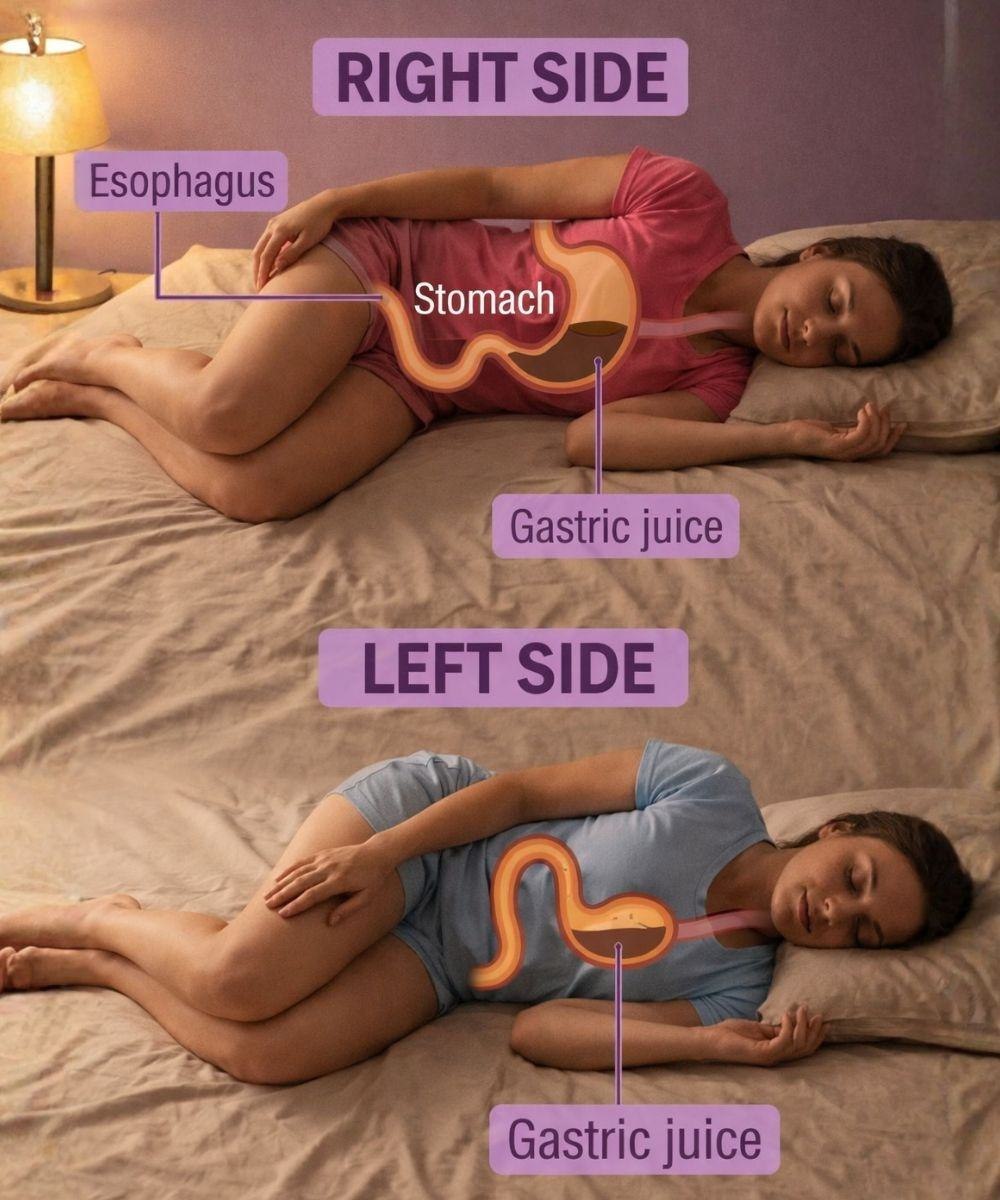
Sleeping position is something most people never think about—but it can quietly affect digestion, breathing, circulation, and even long-term comfort. One of the most debated positions is sleeping on the right side.
You may have heard warnings online about it—but what is actually true, and what is just exaggeration?
Let’s break it down clearly, based on how the body really works.
🧠 1. It May Affect Digestion (Mildly)
Your stomach and digestive organs are positioned in a way that can make body position matter slightly.
When you sleep on your right side:
- Stomach contents may sit differently
- Acid may move more easily toward the esophagus in some people
- It may worsen discomfort for people prone to heartburn
That’s why individuals with acid reflux often feel better avoiding right-side sleeping.
🔥 2. It May Worsen Heartburn in Some People
For people with gastroesophageal reflux symptoms, sleeping on the right side can sometimes increase discomfort.
This is related to a condition known as Gastroesophageal reflux disease.
Possible effects include:
- Burning sensation in the chest
- Sour taste in the mouth
- Nighttime discomfort or coughing
However, this does NOT apply equally to everyone.
❤️ 3. It Can Influence Circulation (In Sensitive Cases)
Body position can slightly affect blood flow, especially in people with existing conditions.
For most healthy people, this is not a problem. But in some cases:
- Pressure on certain blood vessels may feel uncomfortable
- Existing circulation issues may feel more noticeable
This is more relevant for people with cardiovascular or vascular conditions.
🫀 4. Left Side vs Right Side: Why People Compare Them
Many health discussions compare right-side sleeping with left-side sleeping.
In general:
- Left side → often recommended for digestion and reflux comfort
- Right side → may be less comfortable for some with acid reflux
But both positions are safe for most healthy people.
🧍 5. It Depends on Your Health Condition