 Skip to content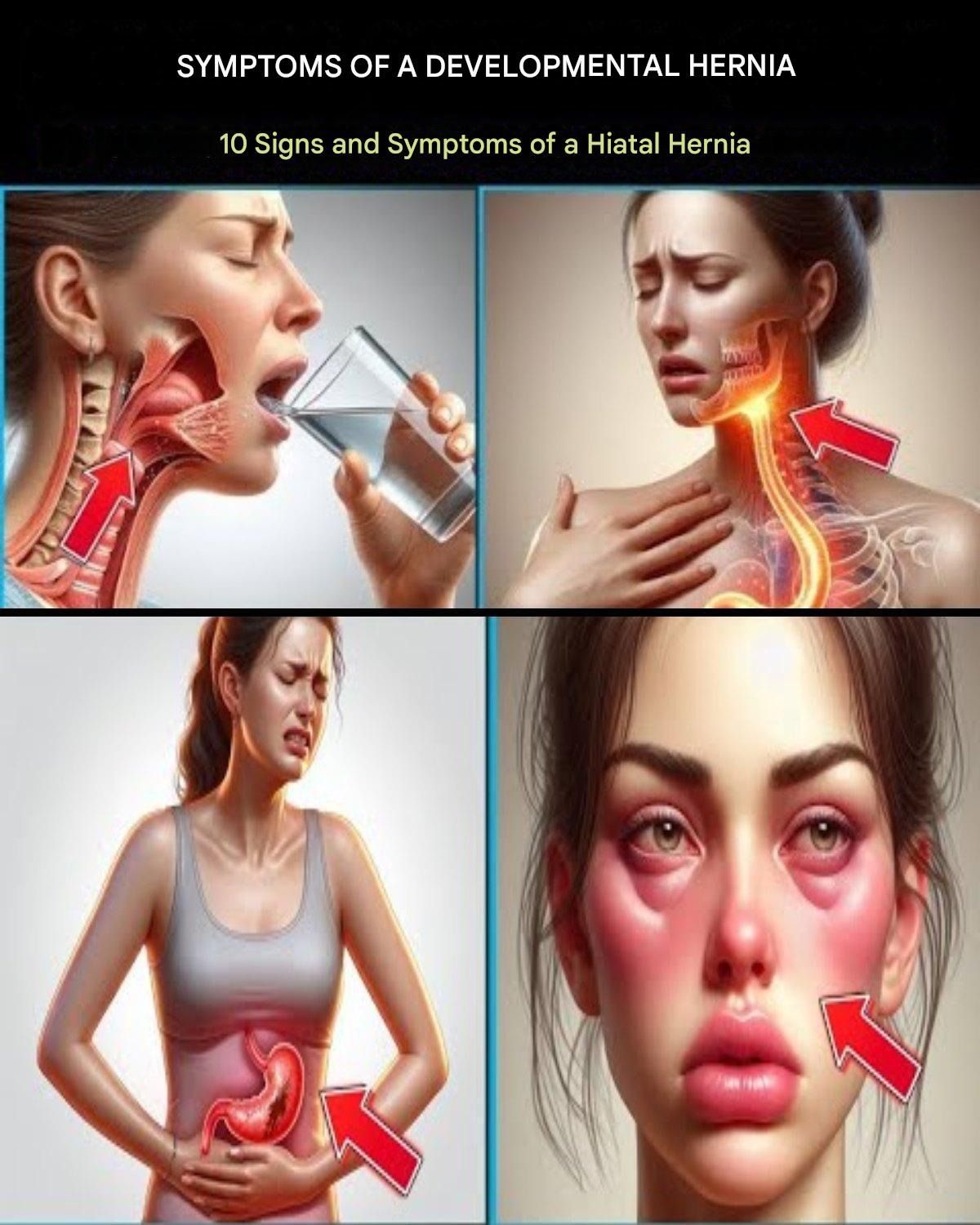
A hiatal hernia is one of those conditions that many people have without even realizing it. In some cases, it causes no symptoms at all. In others, it can lead to persistent discomfort that is often mistaken for simple indigestion or acid reflux.
Understanding the warning signs is important because early recognition can help you manage symptoms and avoid complications.
A hiatal hernia is often linked with digestive issues such as Gastroesophageal Reflux Disease, where stomach acid flows back into the esophagus.
Let’s explore the 10 most common symptoms you should not ignore.
🔥 1. Frequent Heartburn
One of the most common signs is a burning sensation in the chest, especially after eating or when lying down.
This happens because stomach acid moves upward into the esophagus, irritating its lining.
It may feel like chest pain, but it is often related to digestion rather than the heart.
🤢 2. Acid Reflux or Sour Taste in the Mouth
People with hiatal hernia often experience:
- A sour or bitter taste
- Regurgitation of food or liquid
- A burning feeling in the throat
This is due to acid traveling backward from the stomach.
🫁 3. Difficulty Swallowing
Some people feel like food is:
- Sticking in the throat
- Moving slowly down the esophagus
- Causing discomfort while swallowing
This symptom should always be monitored, especially if it becomes frequent.
💨 4. Bloating and Feeling Full Quickly
Hiatal hernia can affect digestion, leading to:
- Abdominal bloating
- Feeling full after small meals
- Discomfort after eating
This happens because stomach positioning affects normal digestion.
😮💨 5. Shortness of Breath
In some cases, a large hernia can press against the diaphragm, making breathing feel slightly difficult, especially after meals or when lying down.
This symptom should be taken seriously if it becomes persistent.
😴 6. Worsening Symptoms When Lying Down
Many people notice that symptoms:
- Get worse at night
- Increase when lying flat
- Improve when sitting upright
This is due to gravity allowing acid to move upward more easily.
🫀 7. Chest Pain (Non-Cardiac)
Hiatal hernia can sometimes cause chest discomfort that feels similar to heart-related pain.
However, it is usually related to:
- Acid irritation
- Esophageal pressure
- Digestive spasms
⚠️ Important: Any chest pain should always be evaluated by a doctor to rule out heart conditions.
🤧 8. Chronic Cough or Throat Irritation
Stomach acid reaching the throat can cause:
- Persistent cough
- Hoarseness
- Sore throat
- Feeling of a “lump” in the throat
This is especially common at night or early morning.
🧠 9. Nausea After Eating
Some people feel mild nausea or discomfort after meals, especially after:
- Large meals
- Fatty foods
- Spicy foods
This is due to pressure and acid movement in the stomach area.
⚖️ 10. Worsening Symptoms with Certain Foods
Symptoms often become more noticeable after:
- Coffee ☕
- Chocolate 🍫
- Fried or fatty foods 🍟
- Spicy meals 🌶️
These foods can relax the lower esophageal valve, making reflux worse.
🧬 What Causes a Hiatal Hernia?