 Skip to content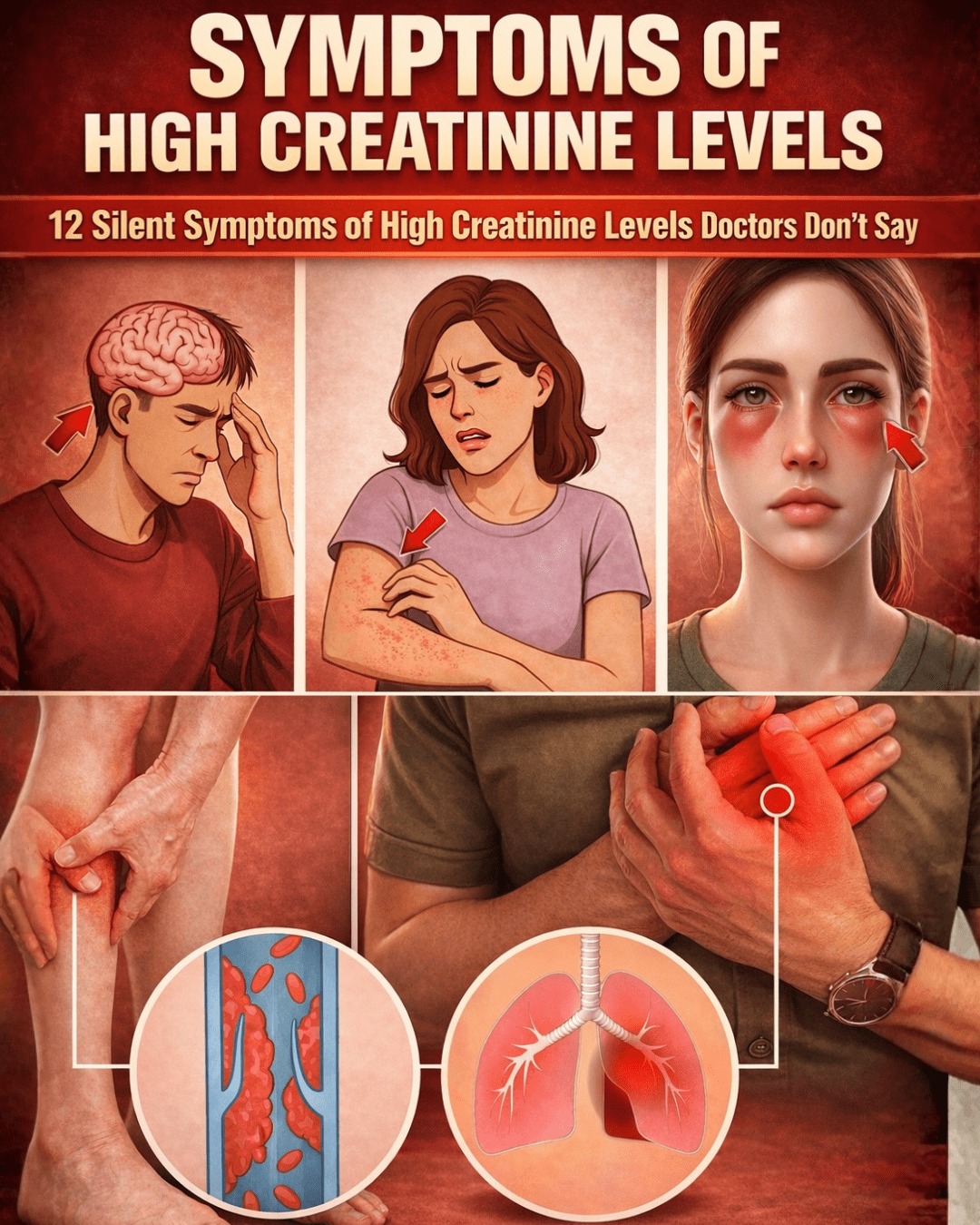
It is important to understand:
- These symptoms are not exclusive to kidney disease
- Many can be caused by dehydration, diet, or other health conditions
- Only a blood test can confirm creatinine levels
Self-diagnosis is not reliable.
🧠 WHEN TO SEE A DOCTOR
You should seek medical advice if you notice:
- Persistent swelling
- Changes in urine for more than a few days
- Ongoing fatigue
- High blood pressure
Early testing can help detect problems before they progress.
🥗 SIMPLE WAYS TO SUPPORT KIDNEY HEALTH
Healthy habits may help reduce kidney strain:
✔ Stay hydrated
Water helps kidneys filter waste.
✔ Limit salt intake
Too much sodium increases fluid retention.
✔ Eat balanced meals
Fruits, vegetables, and lean proteins support overall health.
✔ Avoid unnecessary medications
Some drugs can stress the kidneys if overused.
✔ Exercise regularly
Improves circulation and blood pressure control.
🌟 FINAL THOUGHTS
High creatinine levels are not something to ignore, but they also do not automatically mean severe disease. They are a signal that the kidneys may need attention.
The 12 subtle signs—such as fatigue, swelling, changes in urination, and brain fog—can appear gradually and are often mistaken for everyday tiredness or stress.
Understanding these early warning signs can help with timely medical evaluation and better long-term kidney health.
The key message is simple: listen to your body early, act wisely, and support your kidneys through healthy lifestyle choices.