 Skip to content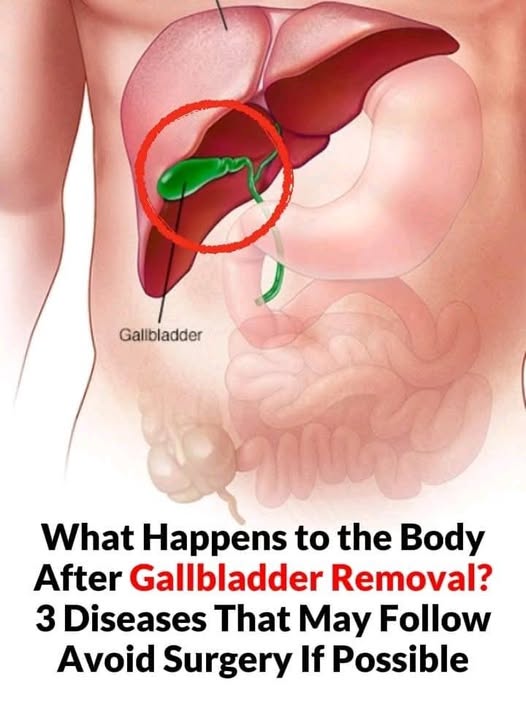
Gallbladder removal—also known as cholecystectomy—is a common procedure, often recommended when gallstones or inflammation cause repeated pain or complications. While many people recover well and live normal lives afterward, it’s natural to wonder how the body changes and what to expect long-term.
Online, you may see claims that gallbladder removal leads to serious diseases or should always be avoided. The reality is more balanced: the surgery is often safe and necessary in certain cases, but it does change how your digestive system works.
Let’s break it down clearly and responsibly.
🧠 What does the gallbladder do?
The gallbladder is a small organ that stores bile—a fluid produced by the liver.
Bile helps:
- Digest fats
- Break down certain nutrients
- Support proper digestion
Normally, bile is released in controlled amounts when you eat fatty foods.
⚙️ What changes after gallbladder removal?
After surgery:
- The liver still produces bile
- But bile flows directly into the intestine instead of being stored
This means:
- Less concentrated bile
- Continuous (instead of timed) bile flow
For many people, the body adapts over time.
🧾 Common short-term effects
After gallbladder removal, some people may experience:
- Mild digestive discomfort
- Bloating or gas
- Loose stools (especially after fatty meals)
These symptoms are usually temporary and improve within weeks or months.
⚠️ Possible longer-term digestive changes
Some individuals may notice ongoing sensitivity, especially to high-fat foods.
🥗 1. Difficulty digesting fatty meals
Without stored bile, large amounts of fat can be harder to process at once.
👉 Solution:
- Eat smaller, balanced meals
- Reduce heavy, greasy foods
🚽 2. Occasional diarrhea
Some people experience changes in bowel habits due to continuous bile flow.
👉 Solution:
- Increase fiber intake gradually
- Stay hydrated
🧠 3. Bile reflux (less common)
In some cases, bile may irritate the stomach or esophagus.
👉 Solution:
- Avoid large meals before bedtime
- Seek medical advice if symptoms persist
❗ Important clarification about “diseases”