 Skip to content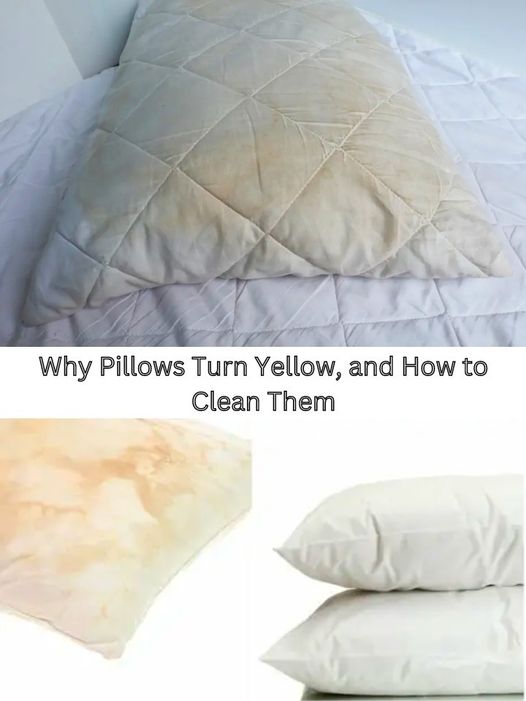
🧠 Introduction: Why Your Pillows Get Dirtier Than You Think
Most people wash their pillowcases regularly—but forget that the pillow itself slowly absorbs:
- Sweat
- Body oils
- Dust and allergens
- Moisture from breathing
- Skin residue over time
Even if a pillow looks clean from the outside, inside it can become yellowed, smelly, and heavy after months or years of use.
The good news? With the right cleaning method, you can refresh most pillows and bring them back to a much cleaner, fresher condition at home.
⚠️ First: Check Your Pillow Type
Before washing, always check the label. Common pillow types include:
- 🪶 Down or feather pillows
- 🧵 Synthetic/polyester pillows
- 🧽 Memory foam pillows (special care needed)
💡 Important: Memory foam pillows should not be machine washed because they can break down easily.
🧼 Step 1: Pre-Treat Stains (For Yellow or Dirty Areas)
If your pillow has visible stains, start with a simple pre-treatment.
You can use:
- Mild liquid detergent
- Baking soda paste
- A small amount of white vinegar
Apply gently on stained areas and let it sit for 15–30 minutes.
This helps loosen oils and discoloration before washing.
🧺 Step 2: Machine Wash (If the Label Allows It)
Most synthetic and many feather pillows can be washed in a machine.
How to do it safely:
- Wash 2 pillows together for balance
- Use warm water (not too hot)
- Select a gentle cycle
- Use a mild detergent
💡 Extra tip: Run an extra rinse cycle to remove all soap residue.
🍃 Step 3: Natural Deep Cleaning Boost