 Skip to content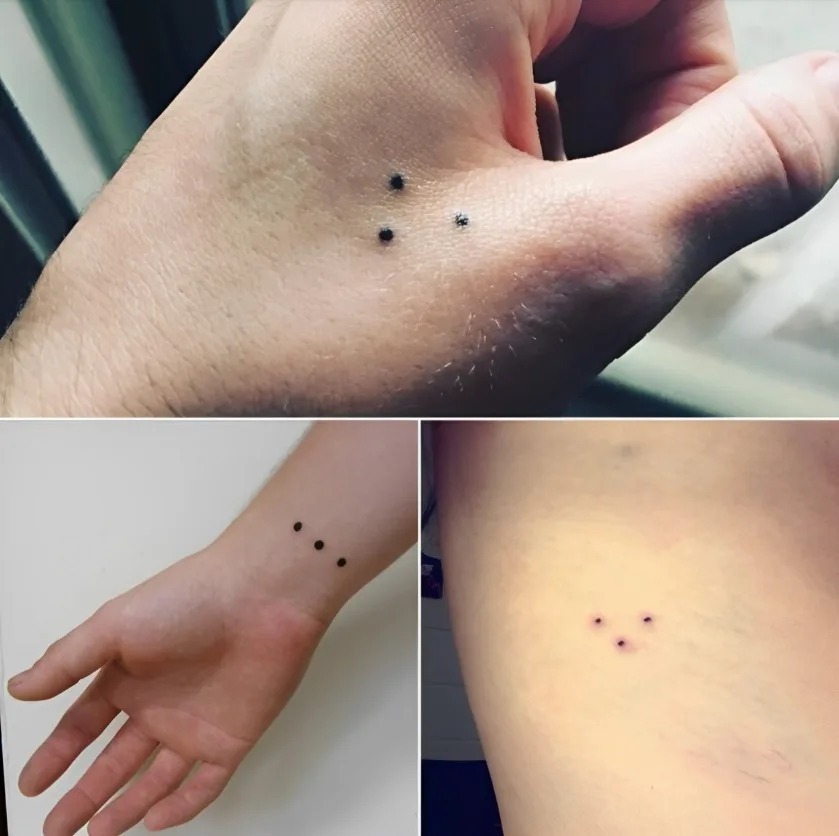
You’ve probably heard the warning before—maybe from a friend, a viral post, or even a dramatic video online: “If you see someone with a three-dot tattoo, run as far as you can.” It sounds urgent, almost like a survival rule you’re supposed to memorize.
But is this actually true… or just another myth that has spread faster than facts?
Before you let fear take over, let’s break down what this symbol really means, where it comes from, and why judging someone based on it alone could be more misleading than protective.
The Origins of the Three-Dot Tattoo
The three-dot tattoo, usually arranged in a triangular pattern, has been around for decades and appears in different cultures across the world. One of the most commonly referenced meanings comes from the Spanish phrase “mi vida loca,” meaning “my crazy life.”
This phrase has, in some cases, been associated with individuals who have experienced a rough lifestyle, including time in difficult environments or involvement in street culture. Because of this, the tattoo has gained a reputation that can feel intimidating or even dangerous to outsiders.
However, here’s what many people don’t realize: symbols evolve, and meanings change depending on who wears them.
Not Everyone Shares the Same Story
It’s a mistake to assume that every person with a three-dot tattoo shares the same background or intentions. In reality, tattoos are highly personal, and their meanings often reflect individual experiences rather than universal truths.
For some, the three dots symbolize:
- Overcoming hardship or a difficult past
- A reminder of where they came from and how far they’ve grown
- The unpredictability of life
- A minimalist design with no deep meaning at all
In recent years, the tattoo has even become popular purely for its simplicity and aesthetic appeal. What once had a specific cultural meaning has now expanded into something much broader.
How Fear-Based Messages Spread
So why do people still say you should “run”?
The answer lies in how information spreads online. Fear grabs attention. Dramatic warnings get shared more often than balanced explanations. Over time, a small piece of truth can become exaggerated into something much bigger—and much scarier.
Social media, movies, and viral content often amplify the most extreme interpretations of symbols. A tattoo that once had a niche meaning becomes labeled as a universal danger sign, even when that’s not accurate.
This is how myths are created—and why they can be hard to unlearn.
The Risk of Judging by Appearance