 Skip to content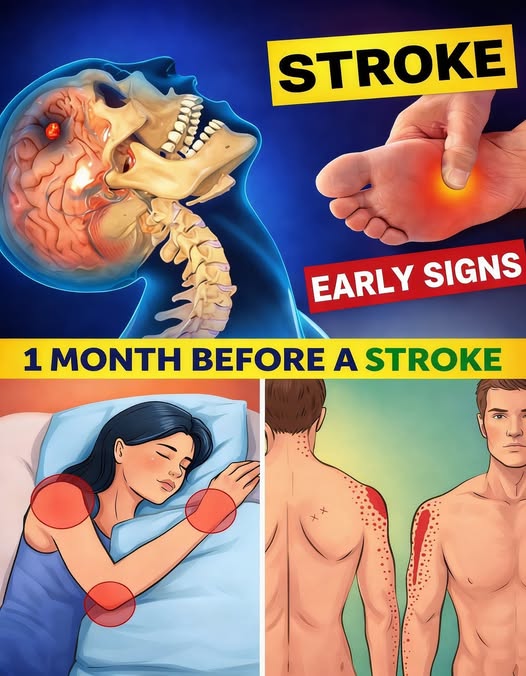
A stroke is a serious medical emergency that happens when blood flow to the brain is interrupted. While strokes can occur suddenly, in some cases the body may show early warning signs days or even weeks before.
Recognizing these signs early—and knowing how to reduce risk—can make a life-changing difference.
Let’s explore the 8 possible early warning signs and 9 practical prevention tips, based on medical understanding and safety-focused guidance.
🧠 8 Warning Signs That May Appear Before a Stroke
⚠️ Important: These signs don’t always mean a stroke will happen—but they should never be ignored.
1. Sudden weakness or numbness
- Often affects one side of the body
- May involve the face, arm, or leg
This is one of the most common stroke-related symptoms.
2. Brief episodes of confusion
You may notice:
- Trouble understanding simple things
- Difficulty concentrating
- Sudden mental “fog”
These can sometimes be mini warning events.
3. Trouble speaking or slurred speech
- Words may come out unclear
- Difficulty forming sentences
- Trouble finding the right words
Even temporary episodes matter.
4. Vision problems
- Blurred or double vision
- Loss of vision in one eye
- Sudden visual disturbances
These can come and go in early stages.
5. Severe or unusual headaches
- Sudden, intense headache
- Different from usual headaches
- Sometimes described as the “worst headache”
This may signal a serious issue.
6. Dizziness or loss of balance
- Difficulty walking
- Feeling unsteady
- Loss of coordination
This increases risk of falls as well.
7. Short episodes of symptoms (mini-strokes)
These are often called transient ischemic attacks (TIAs):
- Symptoms last minutes to hours
- Then disappear
⚠️ This is a major warning sign and requires immediate medical attention.
8. Unexplained fatigue or weakness
Some people report:
- Sudden extreme tiredness
- Low energy without clear reason
This is less specific but can be part of early warning patterns.
🛡️ 9 Tips to Help Reduce Stroke Risk