 Skip to content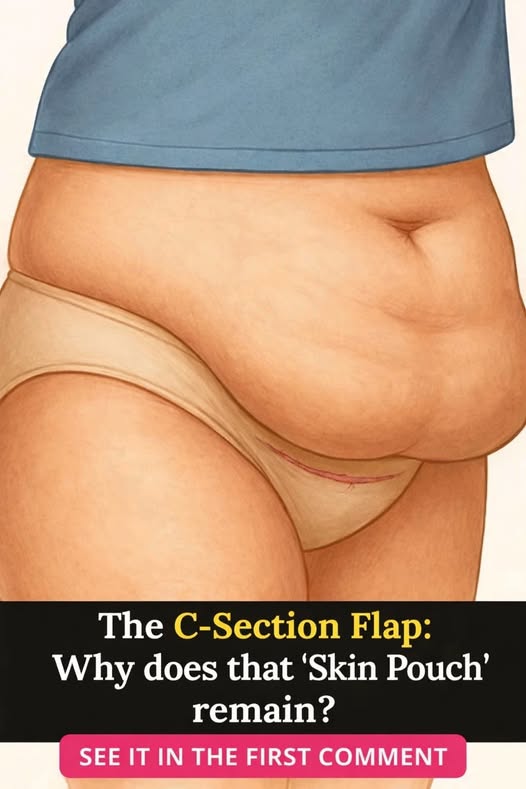
Many women notice a small fold, pouch, or “flap” of skin on the lower abdomen after a Cesarean section (C-section). It can feel unexpected, especially after pregnancy when the body has already gone through so many changes.
This area is sometimes described as a “bag of skin,” but medically it is not a separate structure—it is usually a combination of normal postpartum changes in skin, fat, and abdominal tissue.
Understanding why it happens can reduce confusion and help women approach their recovery with more realistic expectations.
🧠 FIRST: What is the “C-section flap”?
The so-called “flap” is typically:
- Loose skin
- Stretched abdominal tissue
- Mild fat accumulation
- Post-surgical scar changes
It appears just above or around the C-section incision area.
👉 It is not a medical problem by itself
👉 It is a common post-pregnancy body change
🤰 1. Skin stretching during pregnancy
During pregnancy, the abdomen expands significantly to accommodate the growing baby.
This causes:
- Stretching of skin layers
- Loss of elasticity in some areas
- Thinning of connective tissue
After birth, the skin does not always fully return to its original tightness, especially in the lower abdomen.
🧵 2. The role of the C-section incision
A C-section involves a surgical cut through:
- Skin
- Fat layers
- Abdominal wall (in some cases)
When healing occurs:
- Scar tissue forms
- The skin may adhere differently
- The area below the incision can look slightly “folded”
This can contribute to the appearance of a small pouch or flap.
🧬 3. Hormonal and body fat changes
Pregnancy hormones influence how the body stores fat and retains fluid.
After delivery:
- Fat distribution may not return evenly
- Some areas retain more softness
- The lower belly is a common storage zone
This combination can make the flap more noticeable.
🧠 4. Weakened abdominal muscles (diastasis recti)
During pregnancy, abdominal muscles often separate slightly to make room for the baby. This condition is called diastasis recti.
When muscles are weakened:
- The belly may protrude slightly
- Core support is reduced
- The lower abdomen may look softer or rounded
This can contribute to the “pouch-like” appearance.
🪞 5. Gravity and posture effects