 Skip to content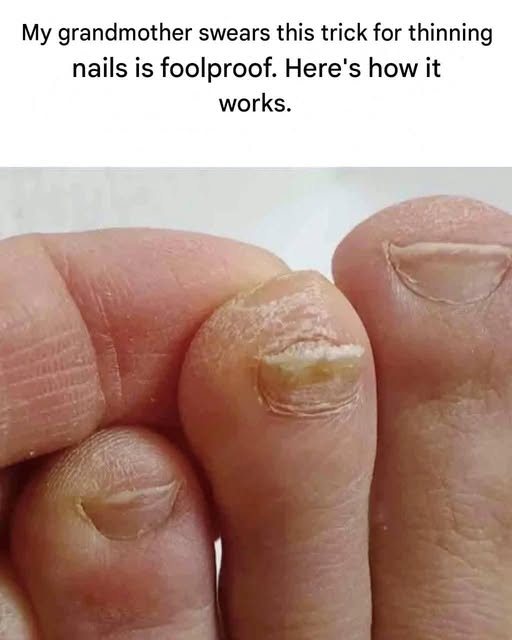
Thickened nails are a common concern, especially as people get older. Nails may become harder, more layered, or difficult to trim. Many families pass down “old remedies” for this issue, and while some of these tricks can offer gentle improvement, it’s important to understand what is actually happening beneath the nail.
Let’s break it down in a clear and realistic way.
🧠 Why Nails Become Thick in the First Place
Thickened nails don’t happen overnight. They usually develop gradually due to:
- Natural aging changes
- Repeated minor trauma (tight shoes, pressure)
- Fungal infections
- Poor circulation
- Long-term nail damage
One common medical cause is Onychomycosis.
This condition can make nails:
- Yellow or discolored
- Hard and brittle
- Thick and uneven
- Slow-growing
🧓 The “Grandmother Trick” (What It Usually Involves)
Many traditional home routines for nail thickening focus on softening and improving nail appearance. A common method includes:
💧 1. Warm Soaking Method
- Soak nails in warm water for 10–15 minutes
- Sometimes with a small amount of salt or vinegar
- Gently dry afterward
👉 This helps soften the nail, making it easier to trim and manage.
🧴 2. Oil Massage After Soaking
- Apply natural oils like olive oil or coconut oil
- Massage into nails and cuticles
- Repeat regularly
👉 This helps improve flexibility and hydration of the nail area.
✂️ 3. Careful Trimming and Filing
- Trim nails slowly and carefully after soaking
- File in one direction to reduce rough edges
- Avoid forcing thick nails
👉 This prevents splitting and damage.
🧠 Does It Really “Reduce Thickness”?
Here’s the honest answer:
👉 These methods do NOT permanently remove nail thickness caused by infection or underlying conditions.
What they can do is:
- Soften nails temporarily
- Improve appearance
- Make trimming easier
- Support overall nail health
So the “foolproof” part is usually about management, not instant cure.
⚠️ When Thick Nails Need Medical Attention