 Skip to content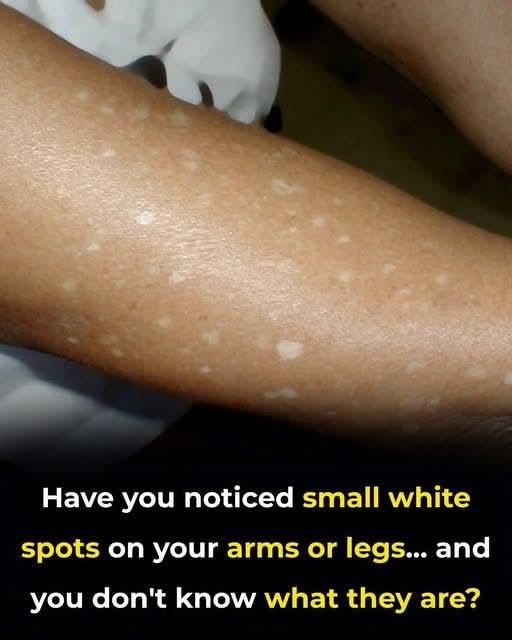
Noticing small white spots on your skin—especially on the arms or legs—can be surprising and sometimes worrying. However, in most cases, these spots are not dangerous and are linked to common skin conditions, sun exposure, or minor changes in pigmentation.
The skin is a complex organ that reacts to many internal and external factors, so changes in color do not always mean something serious. Still, understanding the possible causes helps you know when to simply observe and when to seek medical advice.
🧠 WHAT ARE THESE WHITE SPOTS?
Small white spots are areas where the skin produces less pigment (melanin) than usual. Melanin is what gives skin its natural color.
When melanin decreases in certain areas, small lighter patches or spots may appear.
These spots can vary in:
- Size (tiny dots or larger patches)
- Shape (round, irregular, or flat)
- Number (a few spots or many)
🌞 1. SUN EXPOSURE (VERY COMMON CAUSE)
One of the most frequent reasons for small white spots is long-term sun exposure.
This condition is sometimes called:
👉 Idiopathic guttate hypomelanosis
🧴 What it looks like:
- Small white or light spots
- Mostly on arms and legs
- More common in adults and older individuals
☀️ Why it happens:
- Sun damage affects pigment cells over time
- Melanin production becomes uneven
👉 It is harmless and mostly a cosmetic issue.
🧬 2. DRY SKIN OR MINOR SKIN DAMAGE
Sometimes, white spots appear after:
- Dry skin
- Minor irritation
- Scratches or small injuries
🧠 What happens:
When skin heals or becomes very dry, pigment may temporarily reduce in that area.
👉 These spots often fade over time with proper skin care.
🦠 3. FUNGAL INFECTIONS (LIKE TINEA VERSICOLOR)
Another possible cause is a mild fungal infection.
⚠️ Signs may include:
-
Pages: 1 2