 Skip to content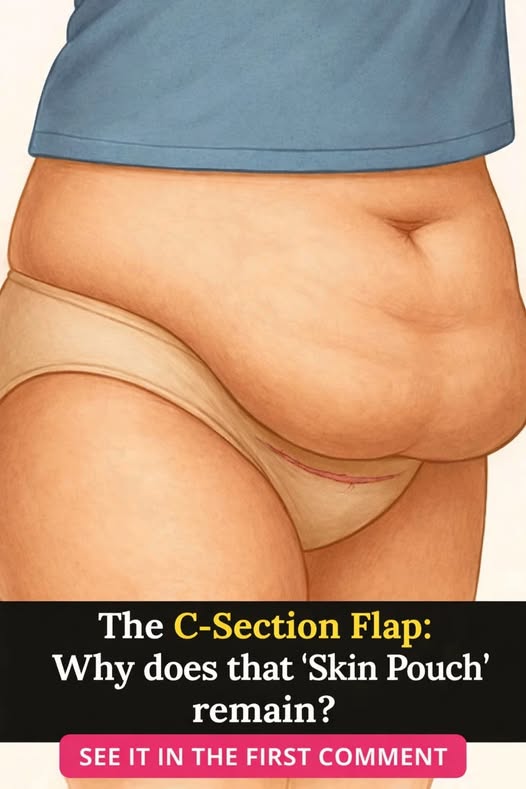
Many women notice something unexpected after a C-section: even after healing, there can be a small “fold,” “pouch,” or soft flap of skin above the scar area. Online, it is sometimes described in dramatic ways like a “bag of skin that never goes away.”
But what is this really? Is it normal? And why does it happen?
Let’s break it down in a simple, honest, and medical-based way 👇
🤱 First: What Is a Cesarean Section?
A cesarean section (C-section) is a surgical procedure where a baby is delivered through an incision in the abdomen and uterus.
Cesarean section
It is one of the most common surgeries in the world and is often performed when vaginal delivery is not safe for the mother or baby.
During healing, the body repairs multiple layers:
- Skin
- Fat tissue
- Abdominal muscles
- Uterine wall
Because of this deep healing process, changes in the lower abdomen are very common.
🧬 Why Does the “Flap” or “Pouch” Form?
The so-called “C-section flap” is not a medical disease. It is usually a combination of skin, fat, and scar-related changes.
Here are the main reasons it appears:
🧷 1. Skin Stretching During Pregnancy
During pregnancy, the skin stretches significantly to accommodate the growing baby.
After delivery, the skin does not always return completely to its original tightness—especially if:
- Skin elasticity is low
- There was significant weight gain
- It is not the first pregnancy
This can create a soft fold or loose skin area.
🧠 2. Changes in Fat Distribution
Hormonal changes during and after pregnancy affect how the body stores fat.
The lower abdomen is a common area where fat may remain or shift, contributing to a small “pouch” appearance.
🩹 3. Scar Tissue Formation
A C-section leaves a surgical scar. As it heals, scar tissue forms underneath the skin.
This can:
- Slightly “pull” the skin inward
- Create uneven texture
- Contribute to a small overhang above the scar
This is often what people notice as the “flap.”
💪 4. Abdominal Muscle Separation
During pregnancy, abdominal muscles can stretch apart. This condition is called:
Diastasis recti
When these muscles are separated, the belly may appear more rounded or less firm, even after weight loss.
⏳ 5. Healing Takes Time
The body does not “snap back” immediately after childbirth. Full recovery can take months or even years.
Skin tightening, muscle recovery, and fat redistribution all happen gradually—not instantly.
⚠️ Important Truth: It Is NOT a “Problem” or “Defect”