 Skip to content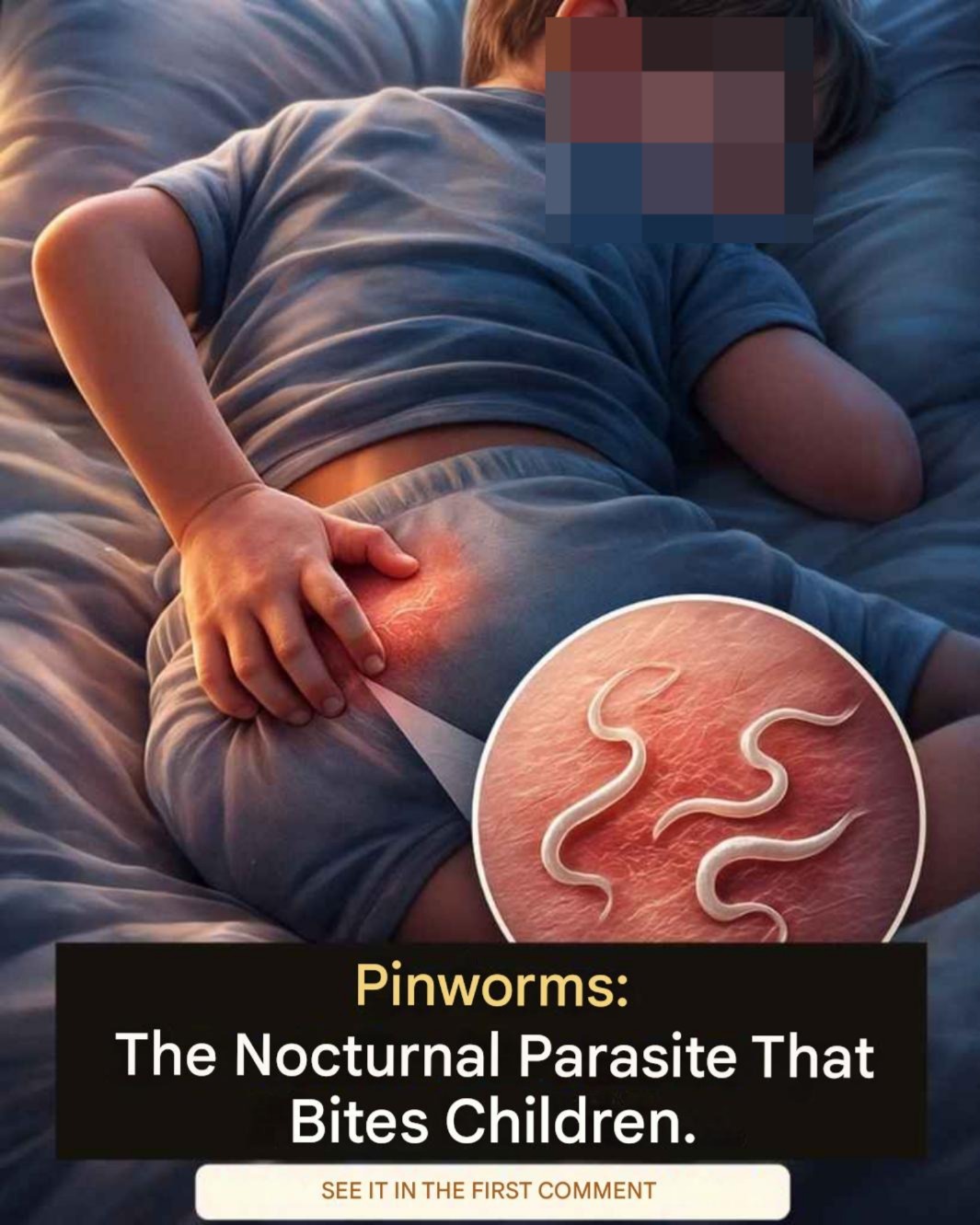
Pinworm infections are one of the most common intestinal parasite conditions in children worldwide, yet they often go unnoticed or misunderstood for a long time. Many parents are surprised when they discover that persistent nighttime itching in a child is not just “skin irritation,” but may actually be caused by a tiny intestinal parasite.
Although the condition is usually not dangerous, it can be extremely uncomfortable and disruptive—especially for sleep.
Understanding what pinworms are, how they spread, and why symptoms worsen at night is essential for early recognition and proper management.
🪱 What exactly are pinworms?
Pinworms are small intestinal parasites scientifically known as Enterobiasis.
They are tiny white worms that live in the human intestine, mainly in the colon and rectal area. The adult worms are very small—often less than 1 centimeter—but they can still cause significant discomfort, especially in children.
Pinworm infections are very common, particularly among school-aged children, because they spread easily in group environments.
🧬 How do children get infected?
Pinworms spread through a very simple cycle:
- An infected person lays microscopic eggs around the anal area
- These eggs can get onto hands, clothes, bedding, toys, or surfaces
- The eggs are accidentally swallowed (often through touching the mouth)
- They hatch inside the intestine and grow into adult worms
This cycle can happen quickly in environments like:
- Schools 🏫
- Daycare centers
- Shared bedrooms
- Play areas
Because the eggs are invisible to the naked eye, infection can spread easily without anyone noticing.
😴 Why does nighttime itching happen?
One of the most distinctive symptoms of pinworm infection is intense itching around the anus, especially at night.
There is a specific biological reason for this:
At night, when the child is sleeping:
- Female pinworms move out of the intestine
- They travel to the anal area to lay eggs
- This causes irritation of the skin
This process triggers:
- Strong itching sensation
- Restlessness during sleep
- Frequent waking up at night
So the nighttime pattern is not random—it is directly linked to the parasite’s life cycle.
🧠 Common symptoms in children
While itching is the most noticeable symptom, pinworm infections may also cause:
- Difficulty sleeping 😴
- Restlessness at night
- Irritability during the day
- Mild abdominal discomfort
- Loss of concentration in school
- Frequent scratching of the anal area
In some cases, symptoms may be mild or go unnoticed entirely.
🧼 How pinworms spread so easily
Pinworm eggs are extremely small and resistant. They can survive on surfaces for a period of time, which makes transmission easy.
Common ways children get reinfected include:
- Not washing hands properly after using the bathroom
- Touching contaminated surfaces and then eating
- Scratching and transferring eggs to hands or nails
- Reusing contaminated bedding or clothes
This is why reinfection is common if hygiene measures are not followed consistently.
⚠️ Are pinworms dangerous?