 Skip to content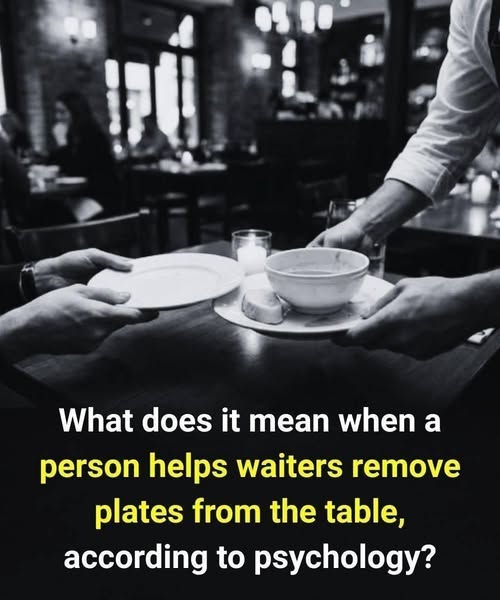
Have you ever been dining at a restaurant and noticed someone quietly stacking plates, gathering napkins, or handing items to the waiter? It might seem like a small, almost insignificant act—but according to psychology, this behavior can reveal a lot about a person’s personality, upbringing, and emotional intelligence.
In a world where character is often judged by big actions, it’s actually the small, unspoken habits that tell the most honest story. Helping a waiter clear the table is one of those subtle behaviors that psychologists say speaks volumes. Let’s explore what it really means.
🧬 The Psychology Behind Small Acts
Human behavior is shaped by values, empathy, and social awareness. When someone goes out of their way to help a waiter—even though it’s not expected—it reflects more than politeness. It shows how they perceive others, especially people in service roles.
This kind of action often happens without thinking, which makes it a genuine indicator of personality rather than a calculated move.
💡 1. High Emotional Intelligence
One of the strongest psychological traits linked to this behavior is emotional intelligence (EQ).
People who help clear the table tend to:
- Notice when someone is busy or overwhelmed
- Understand the effort involved in service work
- Act in a way that reduces stress for others
This shows awareness of other people’s feelings, which is a key component of emotional intelligence. These individuals are often better at building relationships and navigating social situations.
🤝 2. Empathy and Respect for Others
Helping a waiter is a clear sign of empathy—the ability to understand and share the feelings of others.
- It shows respect for people regardless of their job title
- It reflects a belief that everyone deserves kindness
- It breaks down the “customer vs. server” barrier
Psychologists often associate this behavior with individuals who value fairness and human dignity.
🏡 3. Upbringing and Learned Values
Many habits come from childhood. If someone naturally helps clear the table, it may indicate:
- They were taught to clean up after themselves
- They grew up in an environment where helping others was encouraged
- They learned to appreciate effort and hard work
In psychology, these are called internalized values—beliefs that become part of who you are, not just what you do.
🧠 4. Humility and Lack of Entitlement