 Skip to content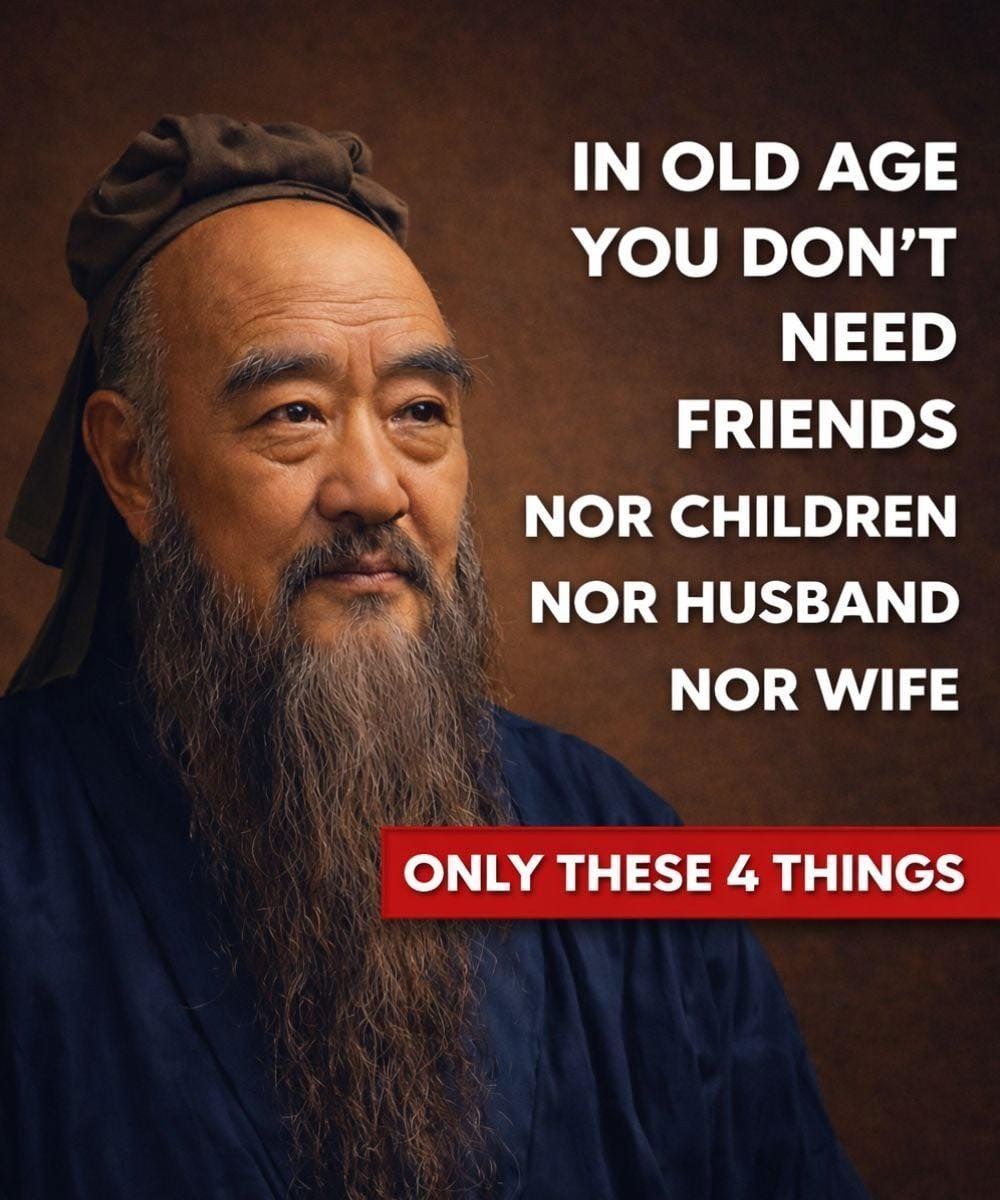
Aging is something every human being shares, but how we experience old age can be very different. Some people enter their later years with peace, dignity, and contentment—while others struggle with loneliness, regret, or emotional stress.
Long before modern psychology, the Chinese philosopher Confucius taught principles for living a balanced and meaningful life. Surprisingly, many of his ideas still apply strongly today—especially when it comes to aging well.
Here are 4 Confucian principles that can help make old age not just longer, but happier and more peaceful.
🌿 1. “Ren” (仁) — Practice Kindness and Compassion
At the heart of Confucian teaching is Ren, often translated as humaneness or kindness.
In old age, this principle becomes especially powerful. When a person focuses on kindness rather than bitterness, something shifts internally.
Practicing Ren means:
- Treating others with patience and understanding
- Avoiding resentment over past conflicts
- Offering gentle support to family and community
Why it matters in old age:
Kindness doesn’t just benefit others—it reduces emotional stress, improves relationships, and creates a sense of belonging.
A peaceful heart often leads to a more peaceful life.
🧘 2. “Li” (礼) — Living with Respect and Structure
“Li” refers to proper behavior, respect, and maintaining harmony in social life.
In practical terms, it means:
- Maintaining respectful relationships with family
- Following simple daily routines
- Valuing traditions and social harmony
For older adults, structure is incredibly important. A predictable and respectful lifestyle can:
- Reduce anxiety
- Improve mental stability
- Create a sense of purpose and order
Confucius believed that harmony in behavior leads to harmony in life—and this is especially true in later years.
🧠 3. “Xue” (学) — Keep Learning Throughout Life
Confucius strongly believed that learning should never stop, regardless of age.
Even in old age, continuing to learn helps:
- Keep the mind active
- Slow cognitive decline
- Maintain curiosity about life
Learning doesn’t have to be formal. It can include:
- Reading books or newspapers
- Learning simple new skills
- Exploring hobbies like gardening, music, or storytelling
A mind that continues to grow feels younger, more engaged, and more fulfilled.
🤝 4. “Yi” (义) — Live with Integrity and Purpose
“Yi” represents righteousness, integrity, and doing what is morally right.
In old age, this principle often shifts from ambition to reflection:
- Living with honesty and clarity
- Making peace with past decisions
- Focusing on meaningful actions rather than material success
Why this matters:
Many emotional struggles in later life come from unresolved regrets or lack of purpose. Living with “Yi” helps a person feel:
- At peace with their life story
- Confident in their values
- Emotionally stable and grounded
It is about finishing life with dignity, not perfection.
🌙 WHY THESE PRINCIPLES STILL MATTER TODAY