 Skip to content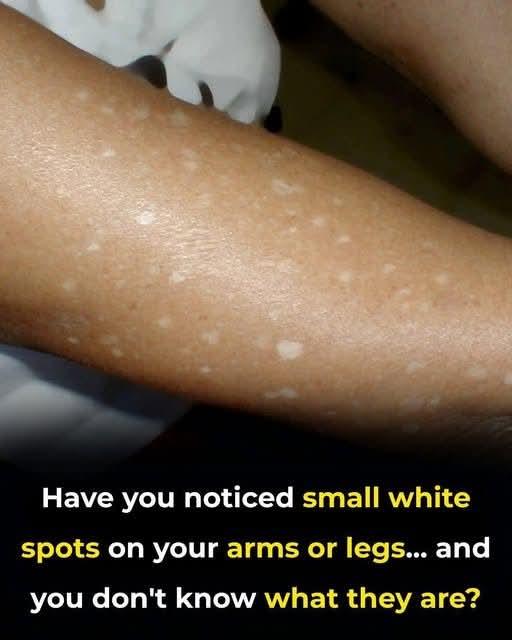
Noticing small white spots on your arms or legs can be surprising—and sometimes worrying. Many people first think of serious conditions, but in reality, most cases are harmless and related to common skin changes.
However, these spots can have different causes, and understanding them can help you know when to relax—and when to seek medical advice.
Let’s break down the most common reasons behind small white spots on the skin.
🌞 1. Sun-Related Skin Changes (Most Common Cause)
One of the most frequent reasons for small white spots is long-term sun exposure.
This condition is often called idiopathic guttate hypomelanosis (IGH).
It usually appears as:
- Small white or light spots
- Mostly on arms and legs
- More common in people over 40
It happens because sunlight slowly reduces pigment production in small areas of the skin over time.
👉 It is harmless and mainly cosmetic.
🦠 2. Fungal Skin Infection (Tinea Versicolor)
Another common cause is a mild fungal infection called Tinea versicolor.
It is caused by an overgrowth of yeast that naturally lives on the skin.
It can lead to:
- Small white, pink, or light brown patches
- Mild itching in some cases
- Spots that become more visible after sun exposure
It is not dangerous and can usually be treated easily with antifungal creams or shampoos.
🧴 3. Dry Skin or Mild Eczema
Sometimes white spots appear due to dry skin or mild inflammation.
This may be linked to conditions like Atopic dermatitis.
Typical signs include:
- Dry, flaky patches
- Slight discoloration after healing
- Mild itching or sensitivity
These spots often improve with moisturizers and proper skin care.
🧬 4. Loss of Skin Pigment (Vitiligo)
In some cases, white spots may be related to Vitiligo.
This condition occurs when pigment-producing cells (melanocytes) stop working in certain areas.
It usually appears as:
- Smooth white patches
- Gradual spreading over time
- More noticeable contrast with surrounding skin
Vitiligo is not contagious or dangerous, but it can be emotionally distressing for some people.
🌿 5. Nutritional or Vitamin Deficiencies (Less Common)
Sometimes, skin discoloration may be linked to deficiencies in nutrients that support skin health, such as:
- Vitamin B12
- Calcium
- Vitamin D
However, this is less common and usually occurs alongside other symptoms like fatigue or weakness.
⚠️ When Should You Be Concerned?