 Skip to content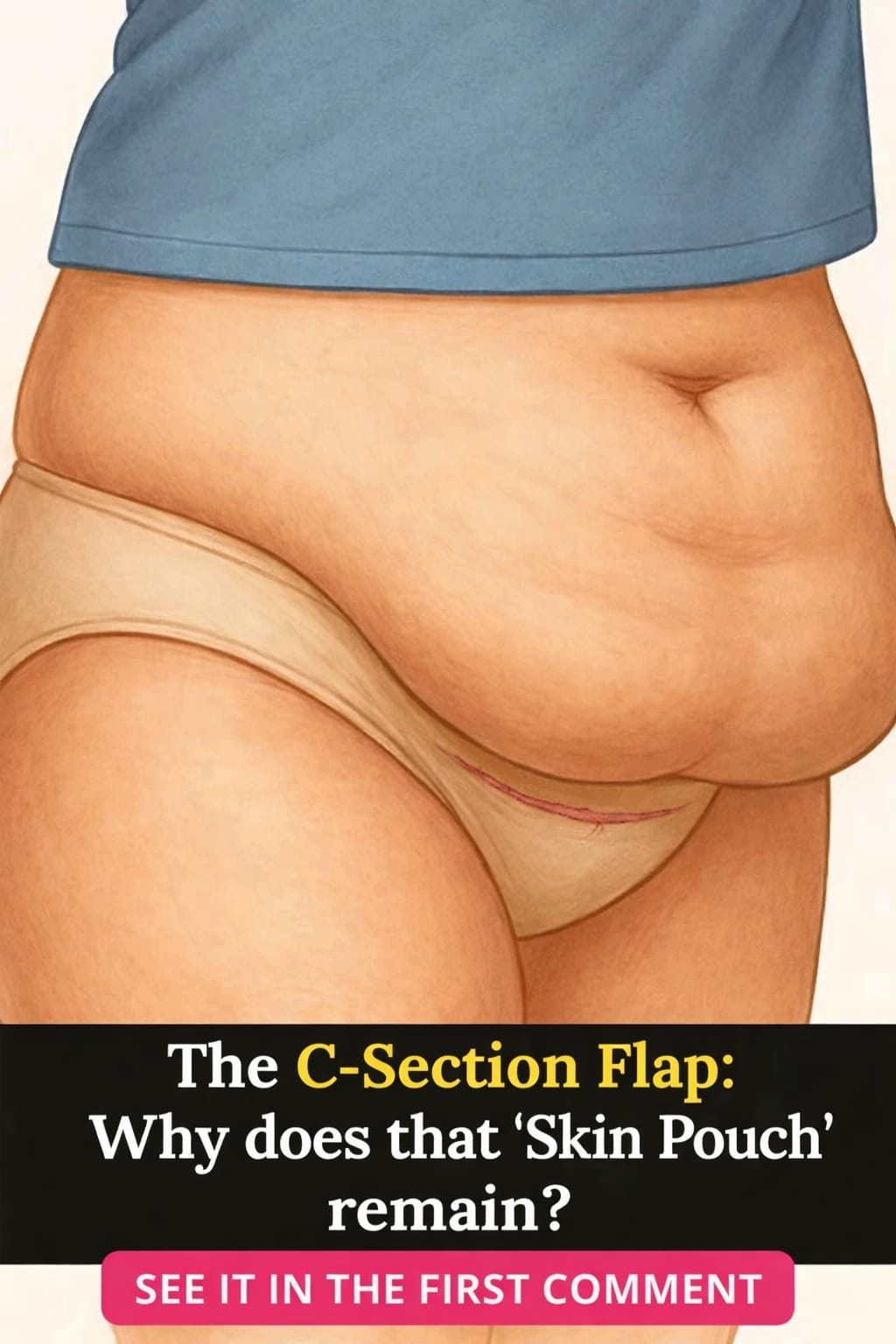
Many women notice a soft “pouch,” fold, or loose area of skin on the lower abdomen after a Cesarean section (C-section). It’s often described as a “flap” or “C-section shelf,” and it can feel surprising or frustrating—especially after pregnancy when the body is already going through so many changes.
The truth is, this change is very common and has clear physical reasons behind it. It is not a sign of failure, nor does it mean the body is not healing properly. Instead, it reflects how the skin, muscles, and connective tissues respond to pregnancy and surgery.
Let’s break down why this happens and what is actually going on beneath the surface.
🧠 1. The Skin Was Stretched Beyond Its Limit
During pregnancy, the abdomen expands significantly to accommodate the growing baby. This stretching affects:
- Skin layers
- Fat tissue
- Connective fibers (collagen and elastin)
When the skin is stretched for months, it does not always return fully to its original tightness after delivery. In C-section cases, the lower abdomen may be more affected due to how the baby sits in the womb in the final months.
This leads to a small overhang or fold of skin in the lower belly area.
🪡 2. Surgical Incision Changes the Lower Abdomen Structure
A C-section involves an incision through the lower abdominal wall. While this procedure is safe and life-saving, it can affect how tissues heal and settle.
After surgery:
- Scar tissue forms internally
- Tissue layers may heal unevenly
- The lower abdomen may feel tighter or slightly “pulled” downward
This combination can contribute to the appearance of a persistent flap or “shelf” above the scar line.
💪 3. Abdominal Muscles May Separate (Diastasis Recti)
One of the most important factors is a condition called diastasis recti, where the abdominal muscles separate during pregnancy.
This can lead to:
- A softer or protruding belly
- Weak core support
- Difficulty flattening the abdomen naturally
Even after delivery, the muscles may not fully come back together without targeted exercises or rehabilitation.
🧬 4. Hormonal Changes Affect Fat Storage
Pregnancy hormones influence how and where the body stores fat. After childbirth, hormone levels shift again, but fat distribution does not always reset immediately.
The lower abdomen is a common area for:
- Fat retention
- Water retention
- Slower metabolic changes
This can make the “flap” appear more visible, especially in the early months postpartum.
🪞 5. Gravity and Posture Play a Role
After pregnancy, posture often changes due to:
- Weak core muscles
- Carrying and breastfeeding habits
- Sleep deprivation and fatigue
Poor posture can push the abdomen forward, making the lower skin fold more noticeable.
Over time, this can become a habitual body position if not corrected.
🌿 Can It Improve Naturally?