 Skip to content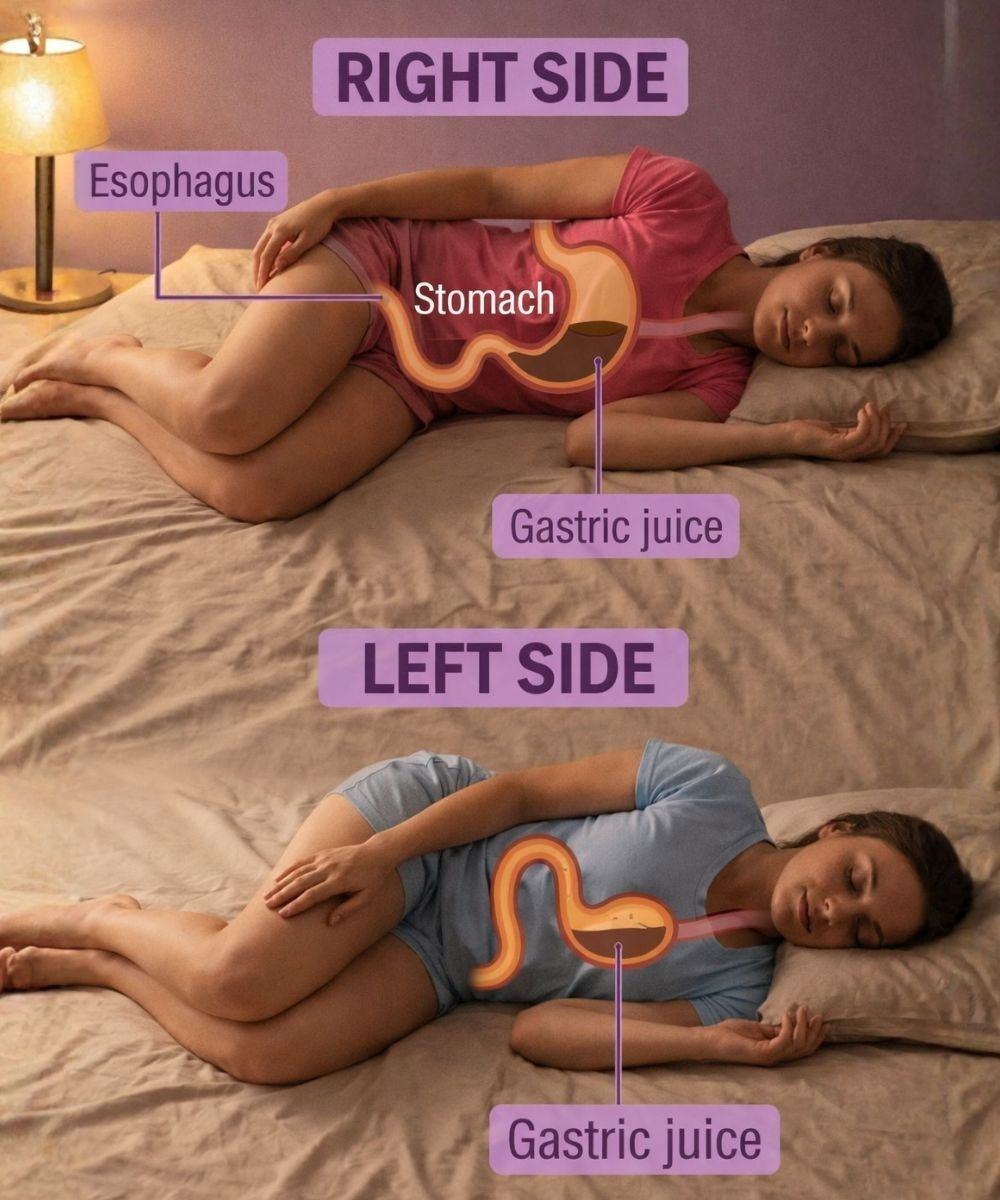
Sleeping position is one of those everyday habits most people never think twice about. You lie down, fall asleep, and repeat the same pattern night after night. But what if something as simple as how you sleep could influence your comfort, digestion, and even how well you rest?
You may have heard warnings like: “Don’t sleep on your right side!” or “It’s harmful for your heart!” These statements can sound alarming—but what’s actually true?
Let’s explore the real facts, the myths, and what science says about sleeping on your right side.
🧠 FIRST: There is no “dangerous” sleeping side for most people
Let’s start with the most important point:
👉 Sleeping on your right side is not dangerous for healthy individuals.
In fact, many people naturally prefer side sleeping, and both sides (left and right) can be comfortable and safe depending on your body and health conditions.
However, certain positions may influence specific bodily functions like digestion or breathing.
❤️ 1. Right-side sleeping and the heart
One common claim is that sleeping on the right side puts pressure on the heart.
🧠 What research suggests:
- The heart is well-protected within the chest
- There is no strong evidence that right-side sleeping harms heart function in healthy people
👉 However, some individuals with heart conditions may feel more comfortable on one side than the other.
🍽️ 2. Digestion and acid reflux
This is where sleeping position can make a noticeable difference.
🧠 Right-side sleeping may:
- Slightly increase the chance of acid reflux in some people
- Allow stomach acid to move upward more easily due to anatomy
✔️ Left-side sleeping may:
- Help keep stomach acid lower
- Reduce reflux symptoms for some individuals
👉 This is especially relevant for people with frequent heartburn.
😴 3. Sleep quality and comfort
Your sleep position affects:
- Spine alignment
- Muscle relaxation
- Breathing patterns
Some people find:
- Right side more comfortable
- Others prefer the left side
- Some switch positions during the night
👉 Comfort is one of the most important factors for good sleep.
🫁 4. Breathing and snoring
Side sleeping (right or left) is generally better than sleeping on your back for:
- Reducing snoring
- Improving airflow
- Supporting breathing
👉 The difference between right and left side is usually minimal for most people.
🧠 5. Circulation and pressure points
Sleeping on one side for long periods can:
- Put pressure on shoulders and hips
- Cause numbness or discomfort
👉 This is not specific to the right side—it applies to any side if posture is not supported properly.
🤰 6. Special case: pregnancy
Pregnant women are often advised to sleep on their left side.
🧠 Why:
- May improve blood flow to the baby
- Supports circulation
👉 This is a specific medical recommendation—not a general rule for everyone.
⚠️ 7. When you might need to adjust your sleeping side